Automated Plate Sealers play an important role in modern laboratories by providing consistent, reliable sealing of microplates used in molecular biology, biotechnology and pharmaceutical research. Whether preparing samples for quantitative PCR (qPCR), Next-Generation Sequencing (NGS) or long-term storage, effective plate sealing helps prevent evaporation, minimise contamination and maintain sample integrity.
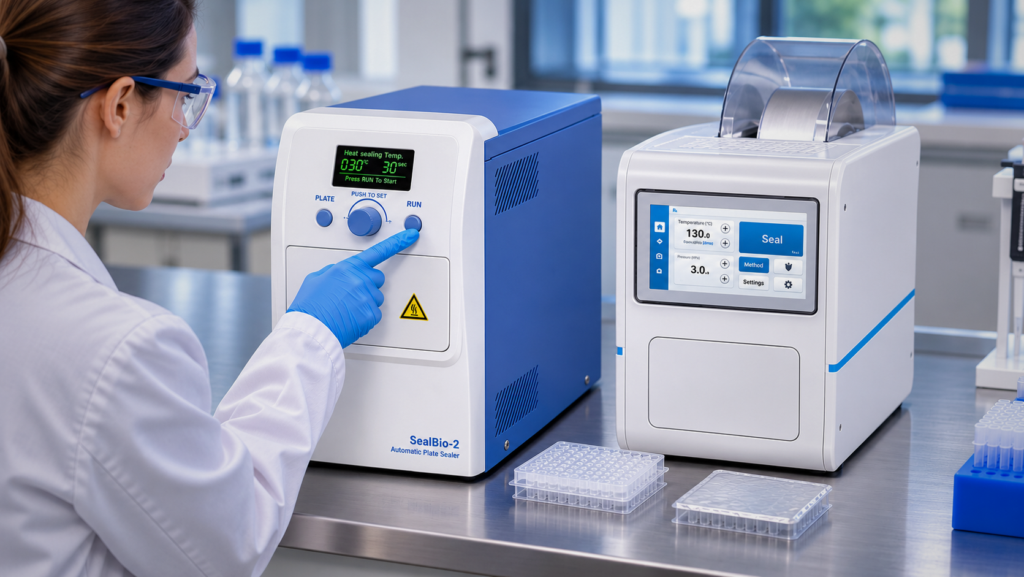
Unlike manual adhesive sealing methods, automated heat sealers apply controlled temperature, pressure and sealing time to create uniform seals across microplates. Consequently, laboratories can improve workflow efficiency, reduce operator variability and achieve more reproducible results.
Automated Plate Sealers for qPCR Applications
In qPCR workflows, preventing sample evaporation is essential for accurate and reproducible amplification results. Poorly sealed PCR plates can lead to changes in reaction volumes, inconsistent fluorescence measurements and unreliable quantification.
Automated Plate Sealers provide consistent sealing across 96-well and 384-well PCR plates, helping maintain reaction volumes throughout thermal cycling. Furthermore, compatible optical sealing films allow fluorescence detection without removing the seal.
For laboratories processing large numbers of samples, automated sealing reduces manual handling and improves consistency between experiments.
Improving NGS Library Preparation Workflows
Next-Generation Sequencing involves multiple sample preparation stages, including DNA fragmentation, library preparation, amplification, purification and quality control.
During these processes, effective plate sealing helps protect valuable DNA and RNA samples from evaporation and contamination. Automated Plate Sealers are particularly useful in high-throughput NGS laboratories, where numerous microplates must be processed consistently.
Additionally, compatible peelable or pierceable sealing films allow researchers to access samples during subsequent processing steps. Fully automatic plate sealers with integrated film feeding can further streamline laboratory workflows and reduce repetitive manual operations.
Reliable Plate Sealing for Sample Storage and Transportation
Laboratories frequently store biological samples, reagents and assay preparations in microplates for future analysis. However, inadequate sealing can result in evaporation, contamination or sample loss during storage and transportation.
Automated Plate Sealers create consistent seals that help preserve sample integrity under appropriate storage conditions. Depending on the application, laboratories can select aluminium foil seals, transparent films or specialised peelable and pierceable materials.
For refrigerated, frozen or ultra-low-temperature storage, selecting a sealing film compatible with the required temperature is essential.
Choosing the Right Automated Plate Sealer
When selecting an Automated Plate Sealer, laboratories should consider plate compatibility, daily sample throughput, sealing film requirements and the level of automation needed.
Allsheng offers both fully automatic and semi-automatic plate sealing solutions suitable for molecular biology and general laboratory applications. These instruments provide adjustable sealing temperatures and times, allowing users to optimise sealing conditions for compatible plates and films.
As a laboratory equipment supplier in South Africa, Apex Scientific provides access to automated plate sealing solutions for qPCR, NGS and sample storage applications.
Contact Apex Scientific today to explore our range of Automated Plate Sealers and identify the most suitable instrument and sealing consumables for your laboratory.