Modern molecular biology depends on obtaining high-quality DNA and RNA quickly, consistently, and with minimal contamination. Whether performing PCR, RT-PCR, sequencing, pathogen detection, or genomic research, the quality of nucleic acid extraction directly influences downstream results.
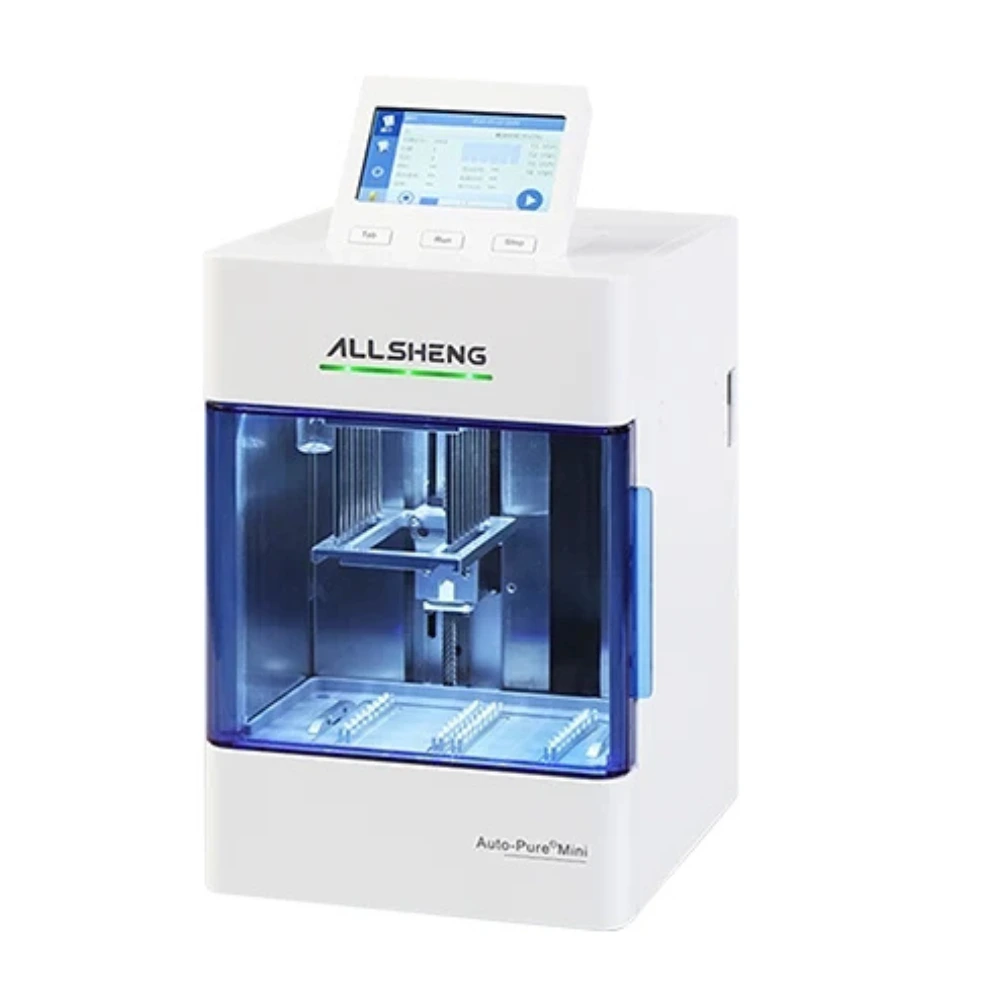
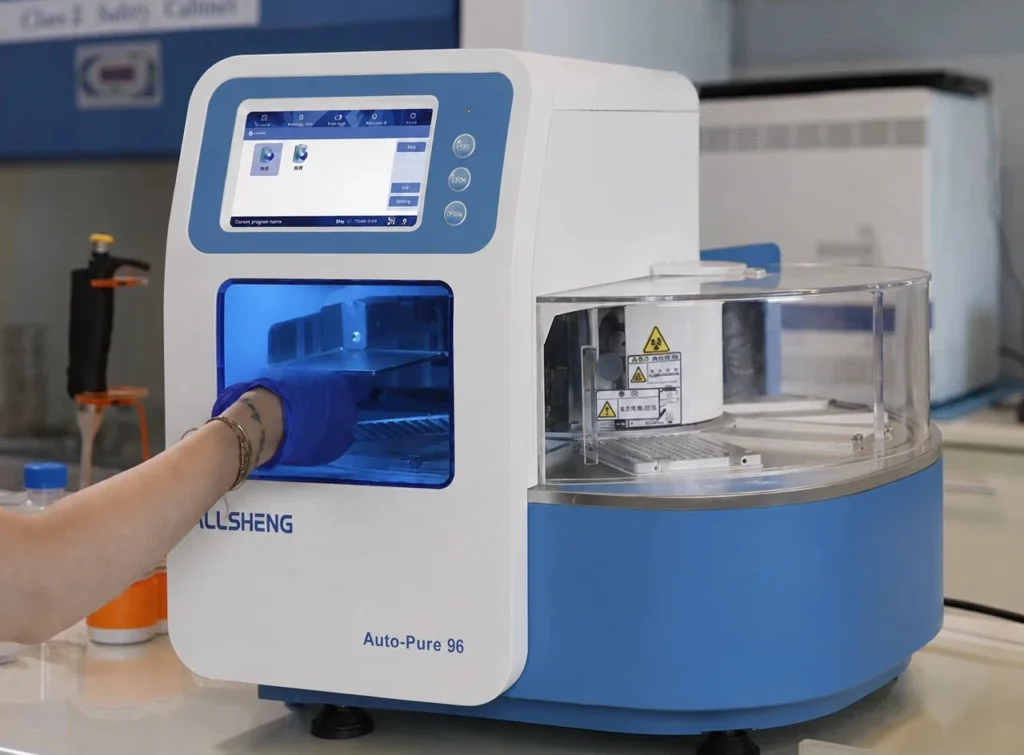
Automated Nucleic Acid Extraction Systems have become the preferred solution for laboratories that require reproducible purification, improved throughput, and reduced manual handling. By combining magnetic bead technology with automated processing, these systems help laboratories improve efficiency while producing highly purified nucleic acids suitable for demanding molecular applications. The Auto-Pure Series uses magnetic bead technology to automate DNA and RNA purification from a wide variety of biological samples while reducing manual intervention.
What is a Nucleic Acid Extraction System?
A Nucleic Acid Extraction System is an automated laboratory instrument designed to isolate DNA or RNA from biological samples before molecular analysis.
Instead of relying on multiple manual centrifugation steps, modern extraction systems use magnetic bead technology to capture nucleic acids while removing proteins, inhibitors, and other contaminants. The purified DNA or RNA can then be used in applications such as:
- PCR
- RT-PCR
- qPCR
- Next Generation Sequencing (NGS)
- Genotyping
- Gene expression studies
- Molecular diagnostics
- Biobanking
Automation improves consistency while reducing operator variability and contamination risk.
How magnetic bead extraction works
Most modern automated extraction systems use silica-coated magnetic beads.
The extraction process typically consists of five stages:
- Cell lysis releases DNA or RNA.
- Magnetic beads bind to nucleic acids under controlled chemical conditions.
- Magnetic rods separate the bead-bound nucleic acids from contaminants.
- Multiple wash steps remove proteins, salts, and residual impurities.
- Elution releases purified DNA or RNA for downstream analysis.
This process eliminates repeated centrifugation while enabling fully automated extraction with consistent performance. The magnetic bead workflow uses lysis, binding, magnetic separation, washing and elution steps to purify nucleic acids efficiently.
Why many laboratories are moving away from manual extraction
Traditional nucleic acid purification methods such as phenol-chloroform extraction and silica spin columns remain widely used, but they can be labour-intensive and difficult to scale.
Automated magnetic bead extraction offers several advantages:
- Reduced hands-on time
- Improved reproducibility
- Higher throughput
- Easier workflow standardisation
- Less exposure to hazardous chemicals
- Reduced risk of cross-contamination
- Suitable for automation and batch processing
Magnetic bead extraction provides purification performance comparable to silica columns while simplifying workflows and supporting automation.
Sample types that can be processed
One of the major advantages of automated extraction systems is their flexibility.
Depending on the extraction kit being used, nucleic acids can be purified from numerous sample types, including:
- Whole blood
- Plasma
- Serum
- Animal tissues
- Plant tissues
- Cell cultures
- Body fluids
- Oral swabs
- Sputum
- Stool samples
- Forensic samples
- Environmental samples
Different Auto-Pure models support both routine laboratory sample volumes and larger-volume extraction workflows.
What is a Nucleic Acid Extraction System?
A Nucleic Acid Extraction System is an automated laboratory instrument designed to isolate DNA or RNA from biological samples before molecular analysis.
Instead of relying on multiple manual centrifugation steps, modern extraction systems use magnetic bead technology to capture nucleic acids while removing proteins, inhibitors, and other contaminants. The purified DNA or RNA can then be used in applications such as:
- PCR
- RT-PCR
- qPCR
- Next Generation Sequencing (NGS)
- Genotyping
- Gene expression studies
- Molecular diagnostics
- Biobanking
Automation improves consistency while reducing operator variability and contamination risk.
How magnetic bead extraction works
Most modern automated extraction systems use silica-coated magnetic beads.
The extraction process typically consists of five stages:
- Cell lysis releases DNA or RNA.
- Magnetic beads bind to nucleic acids under controlled chemical conditions.
- Magnetic rods separate the bead-bound nucleic acids from contaminants.
- Multiple wash steps remove proteins, salts, and residual impurities.
- Elution releases purified DNA or RNA for downstream analysis.
This process eliminates repeated centrifugation while enabling fully automated extraction with consistent performance. The magnetic bead workflow uses lysis, binding, magnetic separation, washing and elution steps to purify nucleic acids efficiently.
Why many laboratories are moving away from manual extraction
Traditional nucleic acid purification methods such as phenol-chloroform extraction and silica spin columns remain widely used, but they can be labour-intensive and difficult to scale.
Automated magnetic bead extraction offers several advantages:
- Reduced hands-on time
- Improved reproducibility
- Higher throughput
- Easier workflow standardisation
- Less exposure to hazardous chemicals
- Reduced risk of cross-contamination
- Suitable for automation and batch processing
Magnetic bead extraction provides purification performance comparable to silica columns while simplifying workflows and supporting automation.
Sample types that can be processed
One of the major advantages of automated extraction systems is their flexibility.
Depending on the extraction kit being used, nucleic acids can be purified from numerous sample types, including:
- Whole blood
- Plasma
- Serum
- Animal tissues
- Plant tissues
- Cell cultures
- Body fluids
- Oral swabs
- Sputum
- Stool samples
- Forensic samples
- Environmental samples
Different Auto-Pure models support both routine laboratory sample volumes and larger-volume extraction workflows.
Applications across research and diagnostics
Automated nucleic acid purification is now used across many scientific disciplines.
Common applications include:
Clinical molecular diagnostics
High-quality DNA and RNA are essential for PCR-based disease detection and infectious disease monitoring.
Genomics research
Researchers require consistent DNA extraction for sequencing, gene expression analysis and molecular biology studies.
Food and agricultural testing
Plant and animal samples can be processed efficiently for disease detection and genetic analysis.
Forensic laboratories
Automated extraction enables purification from challenging forensic samples such as blood stains, hair and other biological evidence.
Disease surveillance
High-throughput extraction supports public health laboratories performing pathogen monitoring and outbreak response.
The Auto-Pure platform is used in genomics, molecular diagnosis, disease control, animal health, forensic science and reagent development.
Choosing the right extraction system
Selecting the correct Nucleic Acid Extraction System depends on several factors.
Consider:
- Sample type
- DNA or RNA extraction requirements
- Daily sample throughput
- Processing volume
- Preferred consumable format
- Available laboratory space
- Future growth requirements
Smaller research laboratories may benefit from compact systems designed for lower daily throughput, while diagnostic laboratories often require instruments capable of processing dozens of samples simultaneously.
The Auto-Pure Series includes compact, medium- and high-throughput instruments supporting from 1 to 96 samples per run and processing volumes up to 10 mL, allowing laboratories to select a model that matches their workflow.
Features to look for
When comparing automated extraction systems, scientists should evaluate more than throughput alone.
Important features include:
- Open reagent compatibility
- Flexible protocol editing
- Accurate temperature control
- UV sterilisation
- Contamination control
- Network connectivity
- Barcode support
- Stable magnetic bead recovery
- Simple touchscreen operation
- Reliable automation
These features help laboratories optimise protocols while maintaining reproducible extraction performance. The Auto-Pure Series includes open software for protocol editing, programmable workflows, UV sterilisation, precise temperature control and compatibility with a wide range of magnetic bead kits.
Supporting reliable molecular workflows
As molecular biology continues to expand into clinical diagnostics, genomics, biotechnology and food safety, laboratories need extraction systems that deliver reliable, repeatable purification with minimal operator intervention.
Automated magnetic bead extraction reduces manual processing while helping laboratories achieve consistent DNA and RNA purification across a broad range of sample types. Selecting a system that matches your sample throughput, application and workflow requirements can improve laboratory productivity and support more reliable downstream molecular analysis.
To learn more about automated Nucleic Acid Extraction Systems explore our YouTube channel and follow us on LinkedIn.